United States Naval Academy
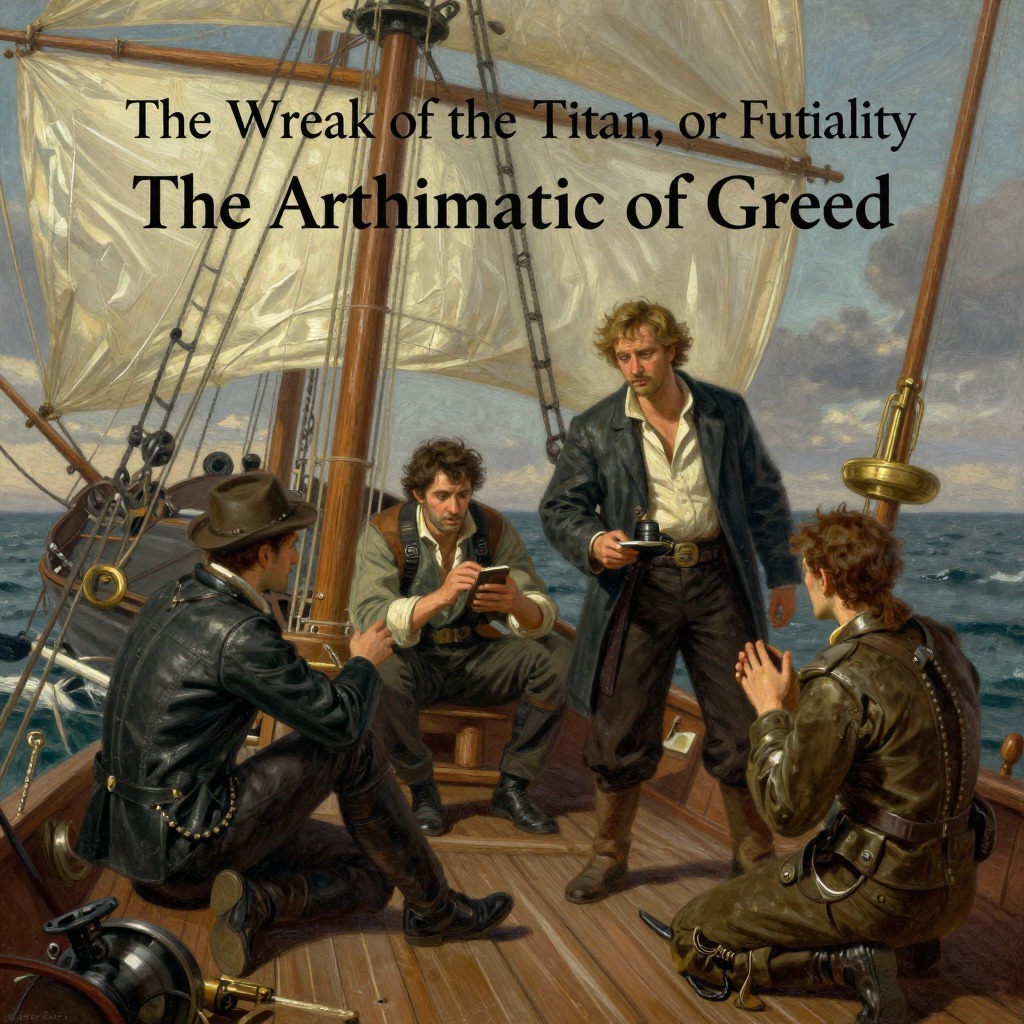
The United States Naval Academy, the federal service academy that educated John Rowland, stands in the background of The Wreck of the Titan as a symbol of lost promise and latent capability. Rowland's graduation from the Academy is revealed during his confrontation with Captain Bryce, when he declares, "A graduate of Annapolis. Your equal in professional technic." This single line establishes that the disgraced, alcoholic sailor who serves as a common lookout on the Titan was once a trained naval officer, and it explains the technical fluency he displays throughout the story. The Academy thus functions as the source of Rowland's professional identity, the foundation of his claim to equality with the ship's officers, and the reason his fall from grace is so striking.
Identity and Background
The United States Naval Academy is introduced indirectly, through Rowland's own testimony. When Captain Bryce attempts to dismiss him as an "irresponsible drunkard," Rowland counters by revealing his education: he is a graduate of Annapolis, the institution that trained officers for the United States Navy. This revelation comes at a critical moment in the confrontation at Lloyds, where Rowland is challenging the captain's authority and the legality of his actions. The Academy's prestige lends weight to Rowland's words, transforming him from a mere foremast hand into a man who can speak the language of admiralty law and navigation with authority. His education also explains his earlier behavior on the bridge, where he discusses Maury's theories of currents and the calculation of ice positions in fog with the first officer, Mr. Austen, demonstrating a knowledge that belies his lowly rank.
The Academy is also a marker of social class and respectability. Rowland's past as a naval officer, and presumably a gentleman, is contrasted with his present condition as a ragged, trembling sailor. The narrator notes that his speech and manner are those of "an educated man," and his Annapolis training is the key to this discrepancy. The Academy thus represents the world Rowland has lost—a world of honor, competence, and professional standing—and its memory haunts his present degradation.
Role in Rowland's Professional Life
Rowland's education at the Academy is not merely a biographical detail; it actively shapes his actions and his ability to resist injustice. When he is drugged with hasheesh and placed on the bridge lookout, he is still able to engage in a sophisticated discussion of navigation with Mr. Austen, who tests him on Maury's theories. Rowland's responses—"Cold is negative heat, and can be treated like radiant energy, decreasing as the square of the distance"—reveal a scientific mind trained at a top institution. This intellectual competence is what makes the officers' plot to discredit him so necessary; they cannot simply dismiss him as an ignorant sailor.
Later, at the confrontation in Mr. Meyer's office, Rowland uses his legal knowledge, also presumably acquired or refined during his naval training, to turn the tables on Captain Bryce and Mr. Austen. He argues that because they are part owners of the Titan, their act of drugging a lookout constitutes barratry, which voids the insurance policy. This argument, which Mr. Thompson the attorney concedes is "law," is a direct product of Rowland's professional education. The Academy thus empowers him to fight back against the powerful men who tried to silence him, and it is the foundation of his moral and intellectual victory.
Contrast with the Titan's Officers
The United States Naval Academy is implicitly contrasted with the Royal Naval College, the institution that trained the Titan's British officers. When Mr. Austen asks Rowland, "I suppose the curriculum is as complete at Annapolis as at the Royal Naval College," he acknowledges a parity between the two institutions. This comparison underscores the theme of national rivalry and professional equality. Rowland, an American, is the intellectual equal of the British officers, and his Academy training is as rigorous as theirs. However, the contrast also highlights the moral difference: while the British officers use their knowledge to deceive and destroy, Rowland uses his to save a child and expose wrongdoing. The Academy, in this light, represents a more honorable tradition of naval service.
Significance in Rowland's Redemption
The Academy's influence extends beyond the maritime world into Rowland's eventual rehabilitation. After the trial, Rowland, now one-armed, rebuilds his life in New York City. He works as a dock lounger, fisherman, tally clerk, and envelope addresser before passing a Civil Service examination and securing a government position. His success in this examination and his subsequent appointment are implicitly linked to his education and intelligence, which the Academy cultivated. The narrator notes that Rowland "seemed to have no difficulty in impressing those whom he met with the fact that he was a gentleman," a quality that his naval training would have instilled. The Academy thus contributes to his final redemption, allowing him to rise from the depths of degradation to a respectable position, even as he remains haunted by his past.
The United States Naval Academy, though mentioned only briefly, is a pivotal element in John Rowland's character. It is the source of his professional expertise, his claim to equality, and his moral authority. It also serves as a symbol of the potential that was nearly destroyed by alcoholism and unrequited love, and it ultimately helps him reclaim a measure of dignity. In a novella that critiques the hubris of technology and the corruption of corporate power, the Academy stands as a reminder of the values of competence, honor, and integrity that Rowland, despite his fall, never entirely loses.